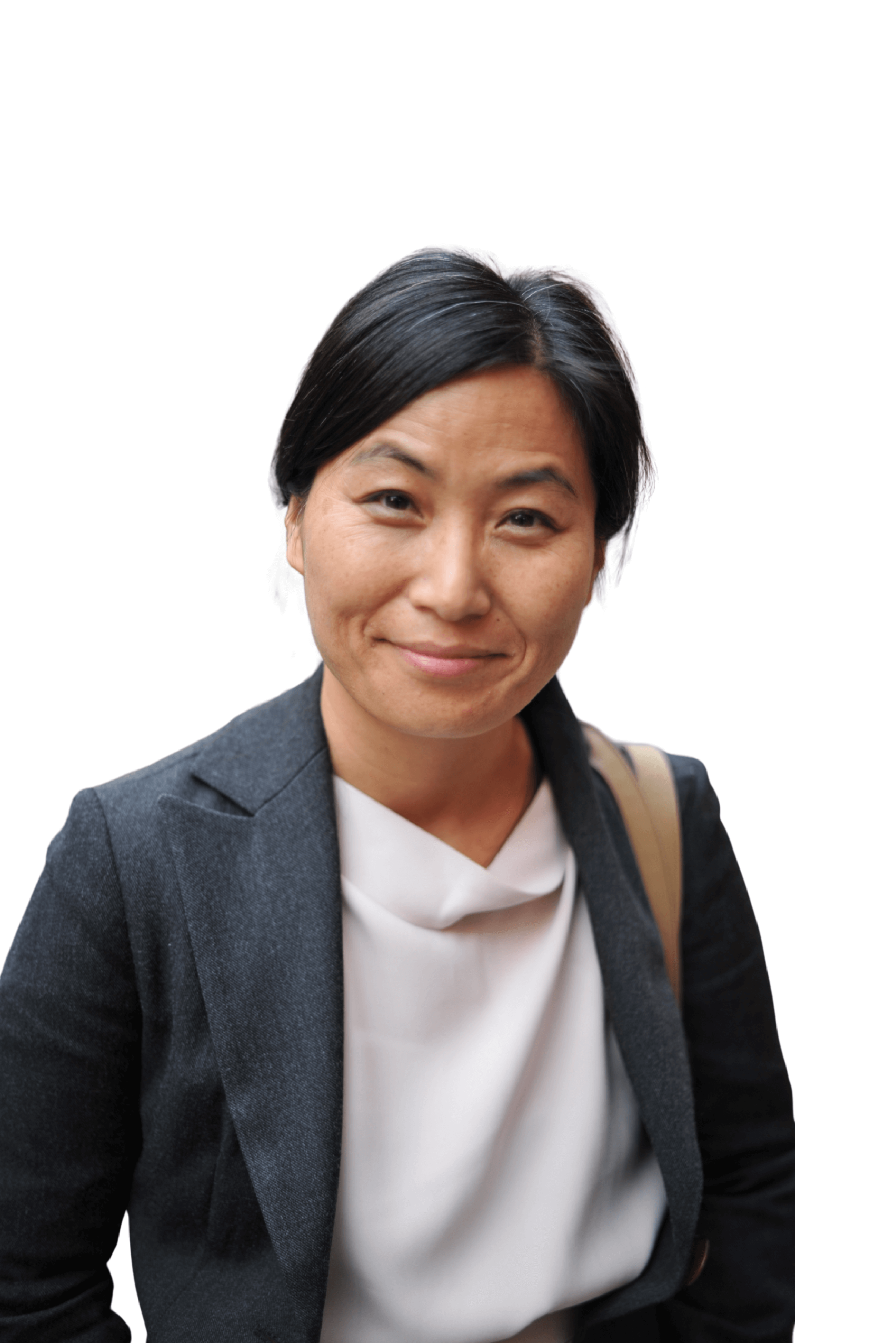
Between Korea, Germany and global teams - in a world dominated by men and machines.
Why power feels „different“ for women
Many women who lead report something similar:
They bear responsibility, lead teams, make decisions - and yet they often feel as if they are leading „against invisible walls“.
You experience:
In short:
One female manager does not simply lead „differently“, but in systems that were not historically built for them.
New levels are being added today:
Digital platforms, data, algorithms, AI - all of this clashes with old power structures. If you want to lead as a woman, you have to power, culture and technology at the same time.
This article is about how you as a female manager can Understanding and using power, without bending.
Female leadership has nothing to do with a „pink leadership style“.
A female manager is - quite soberly - a woman who:
The special thing is not the person, but the Setting:
This gives rise to what is often referred to as „Double Bind“ is experienced:
What is considered „clear“ by a male colleague can be read as „too harsh“ by a woman.
The core idea in such paradoxical communication
It's less about that, like are women, but about that, in which systems they have to lead.
Many women initially reject the term „power“. It comes across as harsh, aggressive and egotistical.
But in management practice: Power equals: the ability to act effectively and influence decisions.
Power shows on several levels:
Women often sit not on the visible levers, but they bear responsibility for the result.
That is why it is so important that female managers have power:
The current situation of female leadership is the result of a three-step development.
Step 1: From exclusion to participation
Women later gained access to Education & Profession, but not automatically to Positions of power.
Step 2: Modern organizations, old management models
Organizations change faster than their image, who is considered „competent“ leadership.
Step 3: Digital & AI era - when data brings old patterns with it
Since 2000 Communication, collaboration and complexity management increasingly important - precisely the skills that are often attributed to female leadership.
At the same time, algorithms are trained on historical data in which:
The result:
AI can Reinforce bias - or deliberately used to make it visible.

If you want to lead here, you need a Map for cultural power:
Who really decides?
Who is allowed to say what openly?
Where is „no“ formulated indirectly?
Studies such as Rosabeth Moss Kanter, Joan Acker show:
Algorithms help decide today:
Female managers who AI Literacy understands:
Technology is a new form of regulation and the power that comes with it.
Initial situation:
A German senior manager leads a global project with a Korean location.
She experiences:
She wonders: „Am I too soft for this role? Or too complicated?“
Coaching makes things visible:
It moves simultaneously in three logics of power:
In the western, individual-oriented meritocracy,
in a Korean-influenced structure of group and hierarchical thinking
in digital systems is somewhat characterized by time pressure, constant availability as 24/7 communication and reporting requirements.
The problem lies not in their personality. The inner Maps and language are missing here to control these complex systems.
With the program „Responsible AI Literacy for Female Leadership“ develop a Communication matrix for your teams. You learn to read, shape and expand power in a targeted manner. To do this, you use AI to analyze communication styles and Tonalities and to vary them. This gives you a clear position as a connecting leader. And you will feel more inner sovereignty.
The offer presented here can be found under „Service-Intercultural“: AI and communication. Profit You will benefit from interactive and exciting practical knowledge from the international working world. We help you to operate effectively in intercultural and technological environments.
Book your appointment now - and start your journey to successful female leadership and effective collaboration in a changing world of work through AI.
Yes - because power exists regardless of whether we like it. Understanding it does not mean dominating others, but Consciously effective to become.
By combining clarity with relationship: clear language, transparent decisions, listening. Then power is effective.
Name it - in the language of the organization: risk, fairness, compliance, reputation. AI Literacy helps you to express well-founded criticism.
Current figures for Germany and the EU: Current data and reports show that although women are more visible in management positions than they were ten years ago, progress is stagnating and Germany is still below the EU average.
In Germany, only around 29% of management positions were held by women in 2024, compared to an EU average of around 35%. Countries such as Sweden and Latvia have a female share of around 44 to 45 percent, while Germany in the bottom third of the EU ranked.
McKinsey „Women in the Workplace 2025 “ Women face less career support and fewer opportunities to advance as companies show declining commitment to women's progress in corporate America. “
The Federal Statistical Office maintains the „Indicators of UN Sustainable Development Goals“. Indicator 5 stands for gender equality with the goal of „achieving gender equality and empowering all women and girls“
Rosabeth Moss Kanter Men and Women of the Corporation A classic on the question of how power and opportunity structures in large organizations shape the careers of men and women; it shows that „typically female behaviour“ is often a consequence of position and access to power - not „nature“. As early as the 1970s, sociologist Rosabeth Moss Kanter showed that it is not ‚the women‘ who are the problem, but the distribution of power and opportunities in organizations.
GlAseer ceiling“ (Glass Ceiling, 1978) is one of Marylin Loden first mentioned and thus coined feminist metaphor. It describes invisible barriers that prevent women from advancing despite their achievements
Double bind theory This term is not only found in communication theory (Gregory Bateson et al's essay „Toward a Theory of Schizophrenia“, 1956). It can also be found in the literature, for example in Chris Bohjallian's Novel The Double Bind (2007), which shows how contradictory expectations can wear a person down.
Movie Hidden Figures (2016): A tribute to three outstanding African-American women mathematicians working at NASA in the early 1960s. Anyone looking for an image of how women nevertheless gain power in technically male-dominated systems will find it in films such as Hidden Figures meaningful story.
„An-nyoung-ha-se-jo“ or „Good day“ Intercultural communication in international business Whether a French HR manager leads the German team in the USA...
Careers with Korean corporations in the DACH region 10 things German, Swiss and Austrian managers should know beforehand Why „only...
The Future Female Leader 1. power and identity Power without harshness, how female leaders use power confidently. Between Korea, Germany...
Understanding Korea Business What a Korean company history tells us about hierarchy, markets and relationships When German teams work with Korean...